
The Dynaton
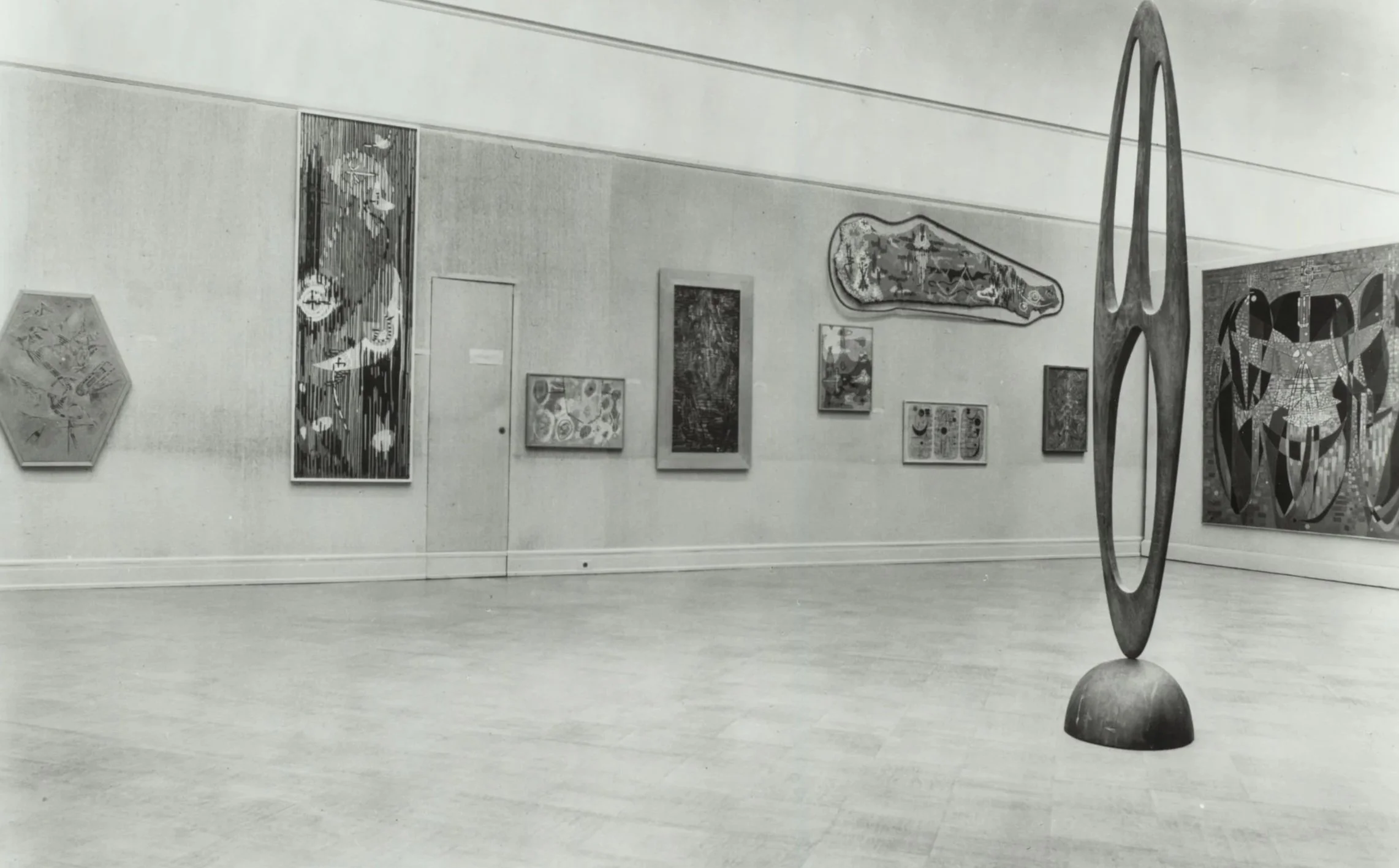
San Francisco Musem of Art Dynaton installation 1951
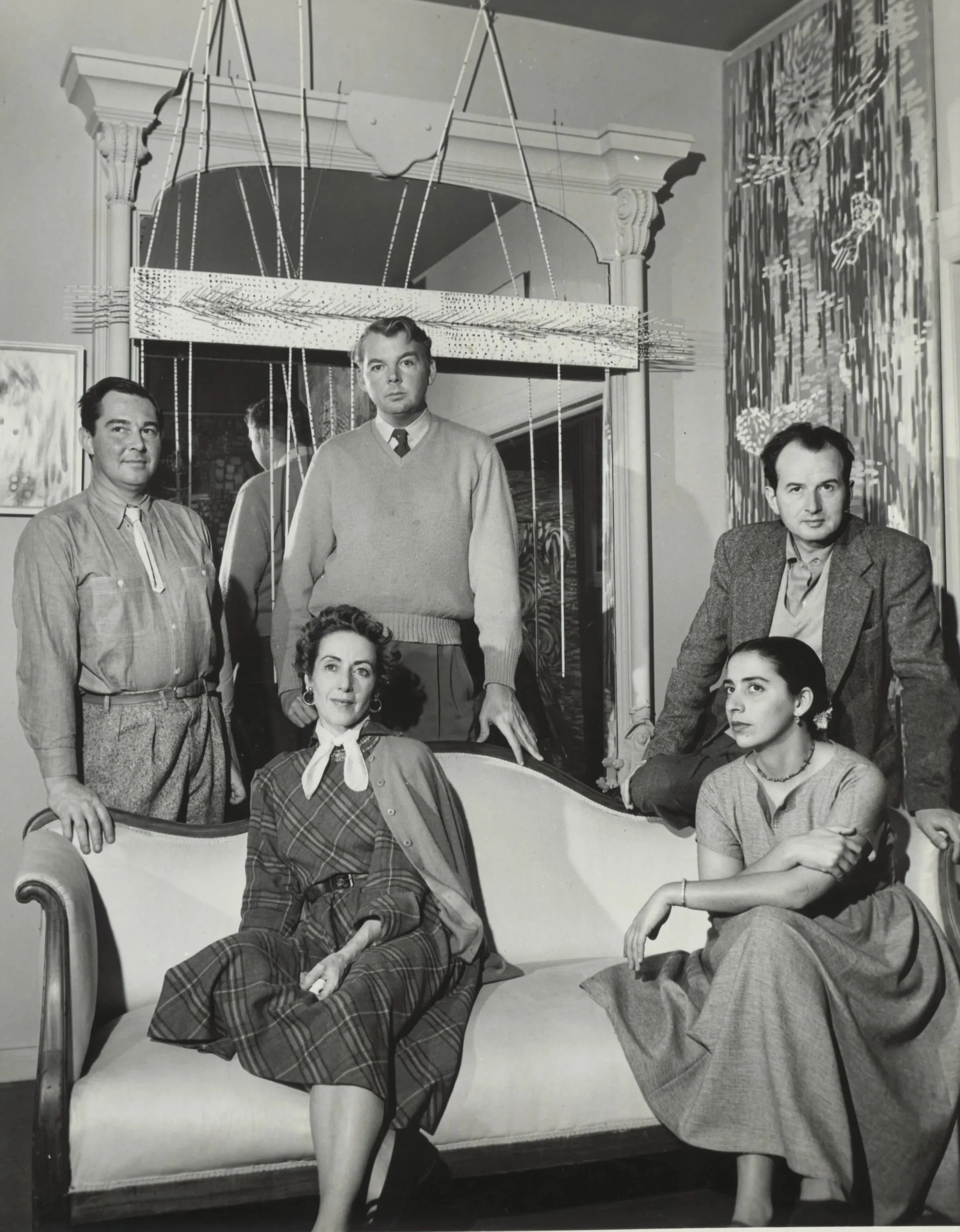
Clockwise: Gordon Onslow Ford, Lee Mullican, Wolfgang Paalen, Luchita Hurtado and Jaqueline Johnson; Courtesy Lucid Art Foundation
Dynaton: Convocation of Radiant Beings
Curated by Laura Whitcomb
Opening Jun 5, 2026 6-8pm
Château Shatto
540 N Western Avenue
Los Angeles, CA 90004
This exhibition marks the seventy‑fifth anniversary of the 1951 Dynaton exhibition at the San Francisco Museum of Art which has taken on an almost mythic status in the history of postwar abstraction. Formed around Wolfgang Paalen, Gordon Onslow Ford, Lee Mullican, and the writer Jacqueline Johnson in postwar San Francisco, Dynaton drew their distinct lineages into a shared project that treated painting and sculpture as a way of accessing a new consciousness in the post‑atomic world—one in which physics, after its apocalyptic deployment, could be reclaimed to re‑enchant reality and reopen an entry into the mystical. In Dynaton, quantum physics’ vision of a fluid, relational universe is set in dialogue with Indigenous cosmologies, and the work is framed, as Johnson writes in the 1951 catalogue, as “search[ing] for the key to existence” by “making actual in an object marvelous inner processes.”
The exhibition begins by examining Paalen and Onslow Ford’s break with André Breton—how quantum‑proposed fluidity undercut his compartmentalised epistemologies—and follows Paalen’s journal Dyn and Onslow Ford’s 1941 New School lectures as they quietly prepare the ground on which Abstract Expressionism would emerge, in tension with Clement Greenberg’s “virgin birth” story of the New American Painting. Equally crucial is the work of the women in and around the constellation—Johnson, Luchita Hurtado, Alice Rahon, Eva Sulzer, Leonora Carrington, Jeanne Reynal—so that Dynaton no longer reads as a closed three‑man formation but as a porous, migratory network.
A further strand revisits Dynaton through Antonin Artaud and the Bureau of Surrealist Research, tracing how, via Rahon, a previously unarticulated chapter of the Surrealists in Mexico comes into view: a Kardecist secret society in which painting and effigy functioned as altars for transformation, including a diorama‑like “incantation” for Artaud in which Paalen and Rahon explore mediumistic spell‑casting at a moment when quantum theory seemed to corroborate shifting universal forces. Alongside the works, rare ephemera from the Lucid Art Foundation and the Hurtado Mullican Estate—letters, photographs, Dyn issues, period documentation—render Dynaton’s cross‑coastal and cross‑disciplinary circuits newly legible. In this light, Dynaton’s paintings, writings, and collaborations can be read, in Johnson’s terms, as a “convocation of radiant beings,” echoing Breton’s “grands transparents” and pan‑cultural folklore of unseen entities who watch and shape the visible world from just beyond perception.
June 5, 6-8 pm, Opening
Archival DJ Mitchell Brown will play Harry Partch Records from the collection of his patron and collaborator Gordon Onslow Ford.
June 6, 12 pm, Walk Through Panel
Entangled Fields: Dynaton and the Physics of Images
This panel brings together Lucid Art Foundation cofounder, artist and scholar Fariba Bogzaran, Caltech physicist Rana Adhikari, artist Marcos Lutyens, and Laura Whitcomb for a focused discussion on Dynaton, physics, and states of perception. Short presentations will move from Paalen’s quantum‑attuned pictorial space, Onslow Ford’s inner world painting, and Mullican’s rhythmical, energy‑like surfaces into Bogzaran’s work on lucid dreaming and its parallel dimension with Surrealism and Dynaton group. Adhikari’s account of fields and entanglement, and Lutyens’s hypnosis‑based projects. Adhikari and Lutyens will also speak about their collaborative quantum-entanglement art project GHoST, a Fulcrum Arts production, which is supported by the Simons Foundation and is part of its “Infinite Sums” initiative. Together, they consider how quantum ideas and Indigenous cosmologies intersect in Dynaton’s effort to “make actual” inner processes in images, and what it might mean today to speak of “quantum fluidity” in painting and experiential art without reducing it to metaphor.
This will be followed by a instrument performance by the leader of PARTCH Ensemble
A further axis of the exhibition is a sustained sonic dialogue with Dynaton through the work of composer and instrument‑builder Harry Partch. Partch sought a discourse with the ancient, recreating and radically extending historical instruments which he discovered on ancient Greek vases. In Partch’s hands, microtonality becomes a kind of quantum tool, using finely split intervals to register a world of continuous, interdependent vibration rather than fixed, stable units—a sonic analogue to the fluid, field‑based reality Dynaton was seeking in paint. The exhibition is presented in collaboration with the PARTCH Ensemble, who will give two performances at REDCAT on June 26 and 27.